
Introductory Memo
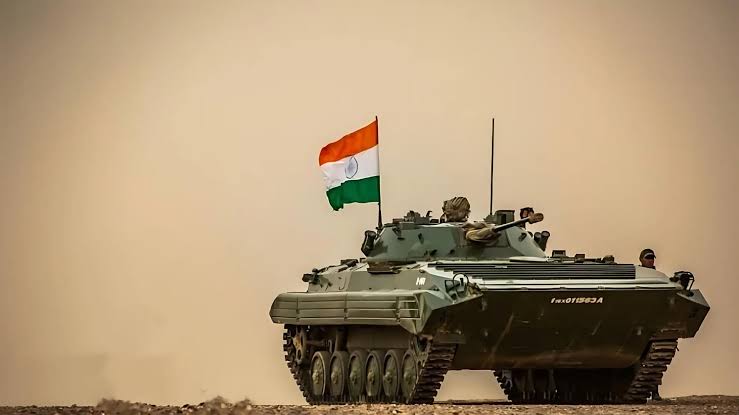
Tanks have been a key part of modern warfare since World War II. For a newly independent India, building a strong armoured force was a military requirement and a strategic necessity, given the security challenges posed by Pakistan and China. Yet, in 1947, India had almost no capability to design or manufacture tanks on its own and depended heavily on foreign suppliers.
Over the next several decades, India steadily moved from importing complete platforms to building a domestic ecosystem for armoured vehicles. ‘Vijayanta’ and ‘Arjun’ tanks played an important role in this transformation.
When India became independent in 1947, it inherited the armoured formations of the British Indian Army. The country's tank fleet consisted mainly of World War II-era platforms such as the Sherman tank, the British Centurion, and the French AMX-13 light tank. These tanks formed the backbone of India's armoured capability during the early years.
India had almost no indigenous capability to design or manufacture tanks. There was little defence research infrastructure and no experience in developing complex armoured vehicles. It depended heavily on Britain and France for spare parts, upgrades, and technical support.
A series of conflicts underlined the importance of building a strong armoured force. During the 1947-48 Kashmir conflict, tanks proved useful even in difficult terrain. The 1962 war with China exposed weaknesses in India's military preparedness. Three years later, the Indo-Pak War of 1965, particularly the Battle of Asal Uttar, demonstrated the decisive role tanks could play on the battlefield. These experiences convinced Indian planners that the country needed its own tank manufacturing capability.
Birth of India's Tank Manufacturing Industry: The Vijayanta Era
By the early 1960s, India had realized that relying entirely on foreign suppliers for armoured vehicles was not a sustainable option. The experience of successive wars and growing security challenges pushed the country to develop its own manufacturing capability. In 1961, India signed an agreement with Britain's Vickers company to produce a new main battle tank (MBT) domestically. Manufacturing facilities were set up at the Heavy Vehicles Factory (HVF) in Avadi, Tamil Nadu.
The result was ‘Vijayanta’, India's first domestically manufactured MBT. Production began in 1965. Over the next two decades, more than 2,200 tanks rolled out of the Avadi assembly lines. The programme marked the birth of India's armoured vehicle industry.
Vijayanta helped create the country's first tank manufacturing ecosystem. It enabled Indian engineers and technicians to gain experience in metallurgy, fabrication, machining and final assembly. The Heavy Vehicles Factory emerged as the centre of India's armoured vehicle production.
The achievement came with limitations also. Vijayanta was based on a British design, and indigenous content remained modest. India had acquired manufacturing expertise but lacked the capability to design and develop a tank entirely on its own. That ambition shaped the next phase of India's journey towards self-reliance.

Throughout its long service life, ‘Vijayanta’ underwent several upgrade programmes to improve its firepower and battlefield effectiveness. Variants such as the Mark 1A and Mark 1B received advanced fire-control systems and improved sights. The Army also proposed the ambitious Bison upgrade, which aimed to equip the tank with a more powerful engine, better electronics and indigenous Kanchan armour. However, with the induction of the Soviet-origin T-72M1, the programme remained limited in scope. As the Vijayanta fleet was gradually phased out, many retired hulls found a new role as the Catapult self-propelled artillery system. Serving for more than four decades, Vijayanta finally retired from frontline service in 2008, while the Catapult variant remained in service until 2021.
Ajeya and Bhishma
During the 1970s, the Indian Army recognized the need to replace its aging Centurion and Vijayanta fleets. Following competitive trials, the Soviet-built T-72 MBT was selected as replacement.
In 1978, India placed an order for 500 T-72, T-72M, and T-72M1 tanks directly from the Soviet Union. Localized license production commenced under the name ‘Ajeya’ at the Avadi factory in the 1980s, eventually introducing more than 2,000 operational T-72 platforms into active service. This made it the numeric mainstay of the Indian Armoured Corps.
The reliance on Soviet armored designs continued into the 21st Century to counter Pakistan's acquisition of Ukrainian T-80 tanks. In 2001, India purchased 310 Russian T-90S ‘Bhishma’ MBTs for USD 780 million. It accepted the first batch of 123 license-assembled T-90S tanks from the Avadi factory on January 7, 2004.
To adapt these foreign platforms to local technologies, the fire control system originally designed for the domestic ‘Arjun’ tank was successfully integrated into Indian-produced T-90S platforms More recently, the Indian Army began taking deliveries of the modernized T-90 Bhishma Mark III, featuring advanced digital upgrades, localized optronics, and newly integrated field modifications such as defensive anti-drone ‘cope cages’ and hand-launched reconnaissance drones.
The Arjun Programme: India's Quest for a Homegrown MBT
By the early 1970s, India had gained considerable experience in manufacturing tanks under licence. Still, it lacked the ability to design and develop a tank from scratch. To bridge this gap, the Defence Research and Development Organisation (DRDO) launched the MBT programme in 1974. The goal was ambitious: to build a modern tank that could match contemporary Western designs in firepower, mobility and protection.
The project was led by the Combat Vehicles Research and Development Establishment (CVRDE), with support from DRDO, the Heavy Vehicles Factory at Avadi, and a growing network of public and private sector suppliers. Beyond producing a new tank, the programme aimed to create indigenous expertise in critical technologies. These included armour protection, fire-control systems, suspension technology, gun systems and various features related to mobility and crew survivability.
More than just a tank development effort, the Arjun programme represented India's first serious attempt to achieve technological independence in armoured warfare.
Challenges that ‘Arjun’ Faced
Building a modern MBT meant mastering dozens of advanced technologies that only a handful of countries possessed. India was attempting to enter a highly exclusive club, and the road proved to be much more difficult than initially expected.
One of the biggest hurdles was the powerpack. The Arjun relied on a German MTU engine and imported transmission systems because India had not yet developed an indigenous alternative. The larger problem was that the country had acquired manufacturing experience, but many critical technologies remained beyond its reach.
Weight emerged as another challenge. As new features and protection systems were added, the tank became heavier than originally planned. Questions were raised about mobility and the ability of existing bridges and infrastructure to support such a heavy platform.
As technology evolved and new battlefield realities emerged, the Army sought additional capabilities. These changes improved the tank but extended development timelines. The ‘Arjun’ project stretched over several decades and was often criticised as one of India's longest-running defence programmes.
Comparisons with the Russian-origin T-90 further intensified the debate. Critics questioned the Arjun's cost, logistics and operational suitability. Supporters argued that such comparisons overlooked the larger objective. ‘Arjun’ programme was about building indigenous capabilities and reducing long-term dependence on foreign suppliers. The programme reflected the difficulties that every nation faces when attempting to achieve technological self-reliance in complex defence systems.
Finally, the Breakthrough
Despite decades of delays and criticism, the Arjun programme produced several important technological breakthroughs. It helped India build capabilities that had previously been available only to a few advanced nations. The programme produced the tank, created knowledge, and built industrial capacity.
One of the biggest achievements was the development of Kanchan armour, an indigenous composite armour system offering a high level of protection against enemy fire. The development of advanced fire-control systems gave the tank excellent accuracy and the ability to engage targets while moving. Its hydropneumatic suspension provided better ride quality and improved mobility over rough terrain.
The first Arjun Mk-1 entered service in 2004. Building on operational feedback, DRDO developed the Arjun Mk-1A incorporating over 70 improvements. These included automatic target tracking, enhanced night-fighting capability, explosive reactive armour, and modern communication systems. The upgraded variant represented a more mature platform.
Over the years, indigenous content increased significantly. A large network of public and private sector companies emerged to support production. The experience gained in metallurgy, electronics, armour technology and systems integration laid the foundation for future armoured vehicle programmes.
Emerging Programmes and the Future
Arjun's long and difficult journey marked India's transition from assembling foreign designs to mastering key technologies required for modern armoured warfare. It gave confidence for newer possibilities like ‘Project Zorawar’.
Project Zorawar
The military standoff with China along the Line of Actual Control (LAC) in Eastern Ladakh starting in May 2020 exposed a critical gap in the Indian Army's armored capabilities.
The Chinese People's Liberation Army (PLA) rapidly deployed modern Type 15 light tanks highly optimized for high-altitude mountain operations. In contrast, the Indian Army had to rely on its heavier T-72 and T-90S MBTs. These 41-to-46-tonne platforms, originally designed for flat plains and desert environments, faced severe operational limitations at altitudes exceeding 4,000 meters. Low oxygen levels reduced engine power output, put excessive strain on transmissions, and limited mobility in rugged terrain.
To address this vulnerability, DRDO and L&T launched ‘Project Zorawar’ in late 2021 to develop an indigenous light tank tailored for mountain warfare. It is designed as an agile, 25-tonne amphibious platform, featuring a lightweight titanium alloy body, a Belgian turret mounting a 105 mm high-pressure rifled gun with an autoloader, a coaxial 7.62 mm machine gun, and a remote-controlled 12.7 mm weapon station. The tank also integrates advanced technologies such as drone-launching capabilities, loitering munitions, twin launchers for Nag Mark 2 anti-tank guided missiles, and a Safran Paseo electro-optical system for hunter-killer operations.
Future Ready Combat Vehicles and Next-Generation Tanks
India's armoured corps is now preparing for a new phase of modernization. Replacing the ageing T-72 tanks while reducing dependence on foreign technology is a major priority. At the centre of these efforts is the Future Ready Combat Vehicle (FRCV) programme.
Envisaged as the successor to the T-72, the FRCV is expected to incorporate several advanced technologies. These include active protection systems to counter modern anti-tank missiles, network-centric architecture for better battlefield awareness and artificial intelligence for faster decision-making. The programme aims to increase indigenous content and strengthen India's domestic defence industry.
India is also looking beyond conventional designs. Work on next-generation MBTs is expected to focus on lighter platforms with improved survivability and greater mobility. Technologies such as hybrid propulsion systems, autonomous functions and unmanned capabilities are likely to play an important role. These concepts reflect the changing nature of warfare, where speed, connectivity and intelligent systems are as important as firepower and armour.
The next-generation combat vehicles could define India’s ability to remain technologically competitive in the decades ahead. The goal is to develop the technologies that will shape the future of armoured warfare.
New Challenges in the 21st Century
India's journey towards self-reliance in battle tanks continues to evolve. It has built strong capabilities in design and manufacturing. The rapidly changing nature of warfare poses different challenges for the next-generation tanks compared to the Cold War era.
One of the biggest gaps remains critical technologies. India still depends on foreign suppliers for high-power engines, transmission systems and some electronic components. Complete technological independence is a work in progress. India seeks greater strategic autonomy in defence. Hence, bridging these gaps has become increasingly important.
Modern anti-tank guided missiles have become more accurate and lethal. To survive these threats, tanks require Active Protection Systems that can detect and destroy incoming missiles or confuse their guidance systems. Such capabilities are becoming standard in many advanced armies.
Recent conflicts, particularly the Russia-Ukraine war, have delivered another important lesson. Drones and loitering munitions have shown that even heavily armoured vehicles are vulnerable when operating without adequate air defence and battlefield awareness. Tanks must function as part of a larger network of sensors, drones and communication systems.
Another challenge is balancing protection with mobility. As new armour and survivability systems are added, tanks become heavier. Greater weight improves protection but creates problems for transportation and manoeuvrability. Future designs will need to find the right balance between the two.
In armoured warfare, the next revolution is likely to be AI-driven. Future tanks will rely on AI-enabled targeting, sensor fusion and increasing levels of automation. For India, mastering these technologies represents the next stage of the journey that began with licensed production in the 1960s. Earlier generations sought freedom from dependence on imported platforms. Now, the challenge is to achieve self-reliance in technologies that will define the battlefields of the future. Also, India will need to remove vulnerability to foreign export restrictions and supply chain disruptions.
No comments yet. Be the first to share your thoughts!