
Introductory Memo
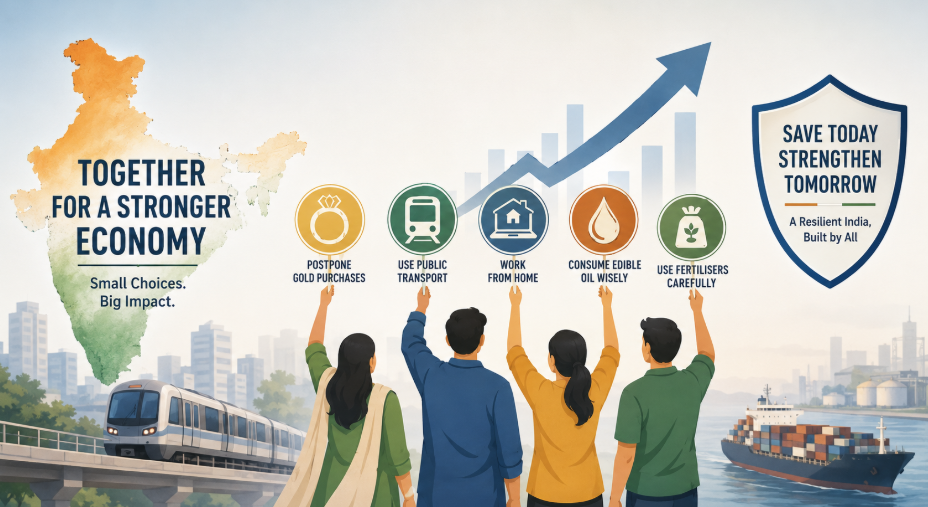
Prime Minister Narendra Modi’s recent appeal urging Indians to postpone gold purchases for at least a year, reduce overseas travel, embrace remote working where possible, use public transport such as metro rail, cut back on chemical fertilisers and consume edible oil more carefully sparked national debate. Beneath the headlines, however, lay a sharp and urgent economic logic tied to India’s external account vulnerabilities that became impossible to ignore during the ongoing US-Iran conflict and the prolonged disruption in the Strait of Hormuz. What makes this appeal historically significant is not merely what was said, but the way it was framed. India has witnessed similar moments before, when governments facing economic strain turned to citizens not just for patience, but for voluntary participation in managing national challenges. Calls for restraint, collective discipline and shared sacrifice have surfaced across different periods of economic stress, reflecting an important feature of India’s public life, but the belief that national recovery cannot rest on the state alone. At its core, this is participatory economic management, rooted in a long democratic tradition where citizens are viewed not as passive spectators, but as active stakeholders in the national interest.
No comments yet. Be the first to share your thoughts!