Gadchiroli. For decades, the very name evoked images of Naxalite violence and isolation. Popular culture often portrayed it as a remote district where even police officers dreaded being posted. Maharashtra’s easternmost district became synonymous with underdevelopment, poor infrastructure, limited industrial activity, and a low Human Development Index (HDI). Dense forests, difficult terrain, and the persistent shadow of Left-Wing Extremism (LWE) kept Gadchiroli on the margins of the state's growth story.
Today, however, Gadchiroli stands at the centre of a remarkable transformation. It is increasingly being viewed as a national example of how a region once trapped in the “Red Corridor” can be integrated into the mainstream economy. The change has not come through security operations alone. Instead, it has been driven by a combination of resource-based industrialisation, large-scale public and private investment, improved connectivity, and a growing focus on social infrastructure.
Created on August 26, 1982, after being carved out of Chandrapur district, Gadchiroli remained disconnected from Maharashtra’s development trajectory for decades. At one point, the district was known for its relatively good roads, built largely by the Border Roads Organisation (BRO). These roads were intended to facilitate the movement of security forces engaged in anti-Naxalite operations. However, after the state government did not renew its agreement with the BRO around 2011, even that limited advantage began to fade.
More importantly, persistent Naxalite violence discouraged investment despite the district’s abundant natural resources. Gadchiroli possesses some of the country's finest iron ore reserves, yet industrial activity remained negligible. The local economy depended heavily on seasonal and low-income occupations such as tendu leaf collection and bamboo harvesting. Access to quality education, healthcare, employment opportunities, and modern infrastructure remained limited. Even the rich iron ore deposits at Surjagarh in Etapalli taluka failed to translate into meaningful industrial growth.
The situation began to change when successive political leaders started focusing on the district’s developmental needs. Leaders such as R. R. Patil, Eknath Shinde, and later Chief Minister Devendra Fadnavis, who served as Guardian Ministers of the district at different times, brought greater attention to Gadchiroli. Fadnavis particularly reiterated his vision of turning Gadchiroli into 'the first district of Maharashtra'. While progress was initially gradual, it accelerated under a twin-track strategy that combined stronger security measures with sustained developmental efforts. The Union Government’s determined campaign against Left-Wing Extremism further strengthened this approach. The first major breakthrough came with the resumption of mining and transportation activities at the Surjagarh iron ore project.
Gadchiroli could have been India’s first steel hub
More than a century ago, Gadchiroli had the potential to become India’s first major steel hub. When its high-grade iron ore reserves were discovered, Dorabji Tata explored the possibility of developing a steel industry in the region. The plan, however, never materialised because the British administration did not reportedly permit the construction of a railway line required to transport the ore.
Even after Independence, the district struggled to convert its mineral wealth into economic prosperity. Lloyds Metals and Energy Ltd., which secured mining rights for Surjagarh, faced repeated disruptions because of Naxalite activity. In 2013, a senior company official was killed by Naxalites. On several occasions, mining equipment and vehicles were set on fire in attempts to halt industrial activity. As a result, employment opportunities remained scarce and economic growth stagnated.
Mining and industrialisation bring a new dawn
A turning point came when coordinated efforts by the Maharashtra Government and LMEL enabled the Surjagarh mine to become fully operational. Improved security conditions, declining Naxalite influence, and rising aspirations among local communities created an environment conducive to investment and industrial growth.
Mining operations expanded, but the transformation was not limited to resource extraction. LMEL established a CBSE-pattern school at Hedri near the mining site, developed healthcare facilities, set up a garment manufacturing unit employing local women, and launched several community outreach programmes. These initiatives reduced the need for residents to travel long distances for quality education and healthcare while creating new livelihood opportunities.
The company subsequently established a pellet plant at Konsari and began work on a large-scale steel manufacturing project. It also introduced an innovative educational initiative by sponsoring selected students from nearby villages to pursue higher education at Curtin University in Australia in fields such as mining, metallurgy, and business administration.
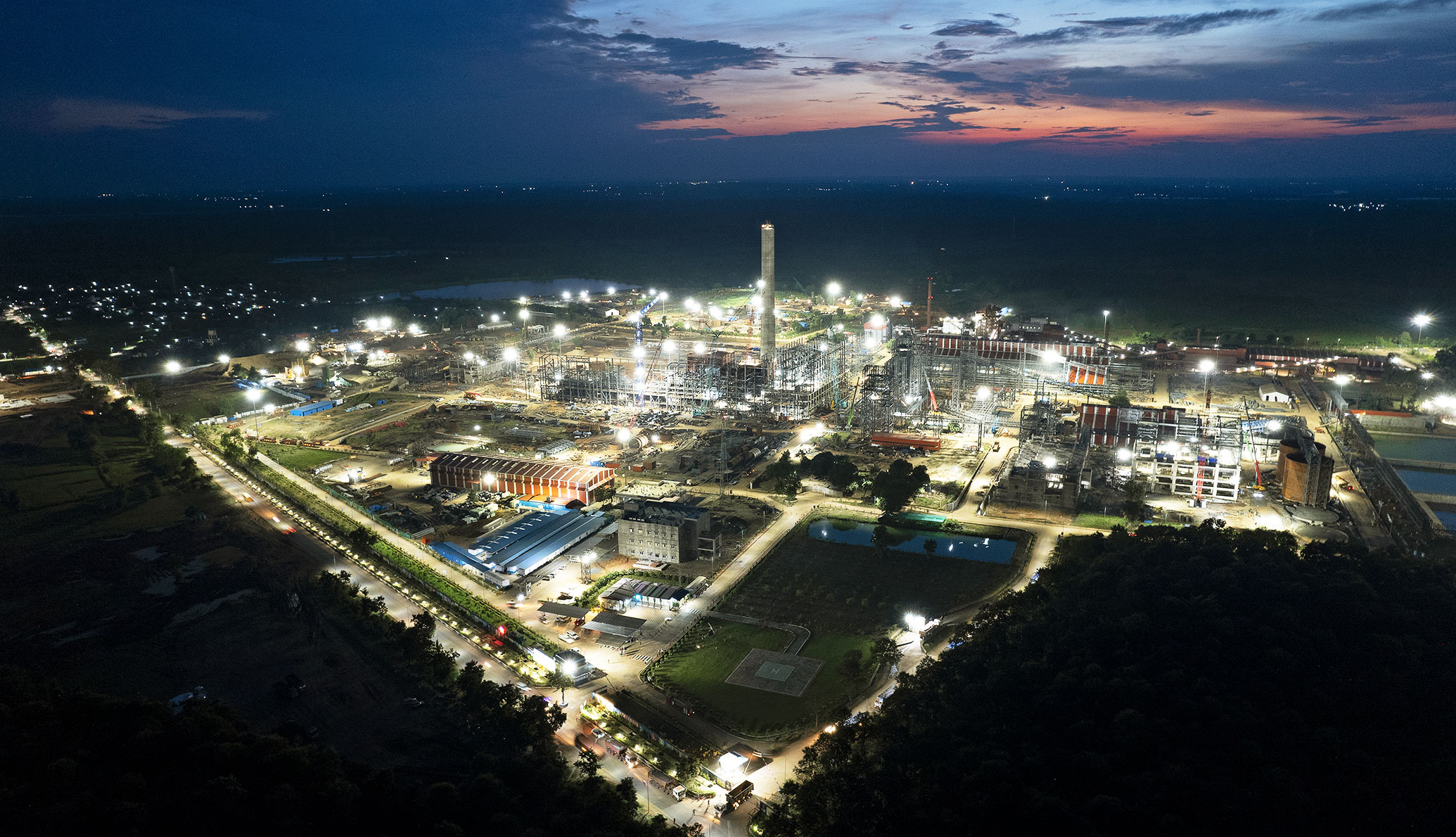
Processing local resources within the district generated employment for thousands of residents and significantly boosted investor confidence. Today, major industrial projects are reshaping Gadchiroli’s economic landscape. JSW is developing what is expected to be the world’s largest steel complex, while Tata Steel has signed a Memorandum of Understanding with LMEL. Surjagarh Ispat Pvt. Ltd. has already commenced operations. According to estimates by the Government of Maharashtra, the district is attracting investments worth nearly ₹3 lakh crore.
Economic turnaround
The economic impact of industrialisation is becoming increasingly visible. Government revenues have risen substantially, while local residents are gaining access to jobs aligned with their educational qualifications and skill sets. Industry-led training programmes are preparing the local workforce for modern industrial employment.
One widely discussed example is that of a tribal woman who joined the mining workforce as a light motor vehicle driver earning ₹12,000 per month. After receiving additional training and skill development, she now operates heavy vehicles in the mines and earns approximately ₹55,000 per month. Such stories would have seemed unimaginable in Gadchiroli little more than a decade ago.
Higher incomes have translated into tangible improvements in living standards. Many families have built permanent homes, purchased motorcycles, and invested in their children's education. Aspirations have expanded alongside opportunities. Initiatives such as the Gadchiroli Police’s Maharashtra Darshan programme for local children and the Dadalora Khidki single-window outreach initiative laid important groundwork even before large-scale industrialisation took off. Today, industrial growth provides an additional socio-economic safety net for the region.
Surrendered Naxalites begin a new life
Perhaps the most powerful indicator of Gadchiroli’s transformation is the rehabilitation of former Naxalites through employment and skill development.
Men and women who once participated in the insurgency are now part of the formal workforce. After receiving training, many have secured jobs ranging from technical positions to administrative and support roles. Employment has provided them not only with income but also with dignity, stability, and a renewed sense of purpose.
This successful rehabilitation has encouraged more Naxalites to surrender and reintegrate into society. An especially noteworthy aspect is that many eligible former Naxalites have become shareholders through Employee Stock Option Plans, which are available to employees under company policy. Such participation in wealth creation is rare and highlights the distinct nature of Gadchiroli’s development model.
Eco-friendly development
Industrialisation in a district where nearly 70 per cent of the land is under forest cover inevitably raises environmental concerns. Gadchiroli has witnessed protests and debates over ecological sustainability. However, several measures are being implemented to minimise environmental impact while supporting industrial growth.
These include extensive use of electric vehicles, an 87-kilometre slurry pipeline that significantly reduces heavy truck traffic, waste heat recovery systems, and technology-driven efforts to lower carbon emissions. The ambitious Green Gadchiroli initiative aims to plant 11 lakh trees, while a broader partnership involving government agencies, industry, and civil society organisations plans to plant one crore trees across the district. The state government’s emphasis on green steel production further reinforces this commitment to sustainable development.
Gadchiroli District Mining Area Authority
A key institutional innovation supporting the district’s transformation is the Gadchiroli District Mining Area Authority.
Established by the Maharashtra Government, this specialised framework functions as a fast-track administrative and regulatory mechanism designed to streamline approvals, coordinate infrastructure development, and reduce bureaucratic delays in mining and industrial projects.
Operating under the supervision of the District Collector and in coordination with the Directorate of Geology and Mining, the authority facilitates land acquisition, forest clearances, transport infrastructure approvals, and other critical processes. It also oversees major extraction projects and environmentally sensitive transport systems such as slurry pipelines.
Recently, the Maharashtra Government urged the Centre to allocate six iron ore blocks to the Maharashtra State Mining Corporation. The move is expected to accelerate mining operations, improve logistics and processing capabilities, and strengthen Gadchiroli’s emergence as a major steel-producing region with national strategic significance.
Railway line and airport
Industrial growth on the scale envisioned for Gadchiroli requires robust transport infrastructure.
To handle millions of tonnes of industrial cargo without overburdening local roads, several major connectivity projects are underway. These include
Wadsa–Gadchiroli Broad Gauge Railway Line: A critical, long-awaited broad gauge railway linkage explicitly designed to break Gadchiroli's rail isolation. Active land acquisitions are underway to lay a reliable freight and passenger corridor.
Gadchiroli Commercial Airport: The civil aviation plan includes the construction of a regional airport in Gadchiroli to ensure immediate executive and logistical airways connectivity to major commercial capitals like Mumbai and Nagpur.
The UIT model
Another significant initiative is the University Institute of Technology (UIT), a premier autonomous institution under Gondwana University.
Operating through a public-private partnership model, UIT seeks to bridge the gap between local talent and the rapidly growing industrial ecosystem. The institute offers courses designed in consultation with industry and has developed partnerships with international institutions such as Curtin University.
By training tribal youth in advanced disciplines related to mining, metallurgy, engineering, and industrial technology, UIT is helping create a skilled workforce capable of participating in the district’s economic transformation.
Gadchiroli is steadily evolving into a national model for converting a conflict-affected region into a growth-driven economy. Improved security, infrastructure development, industrial investment, educational expansion, environmental safeguards, employment generation, and the effective rehabilitation of surrendered Naxalites have together reshaped the district’s trajectory.
The transformation is still a work in progress, but the results are already visible. The larger question now is whether this model can be adapted and replicated in other tribal-dominated, forest-rich, and formerly Naxal-affected regions across India.

No comments yet. Be the first to share your thoughts!