
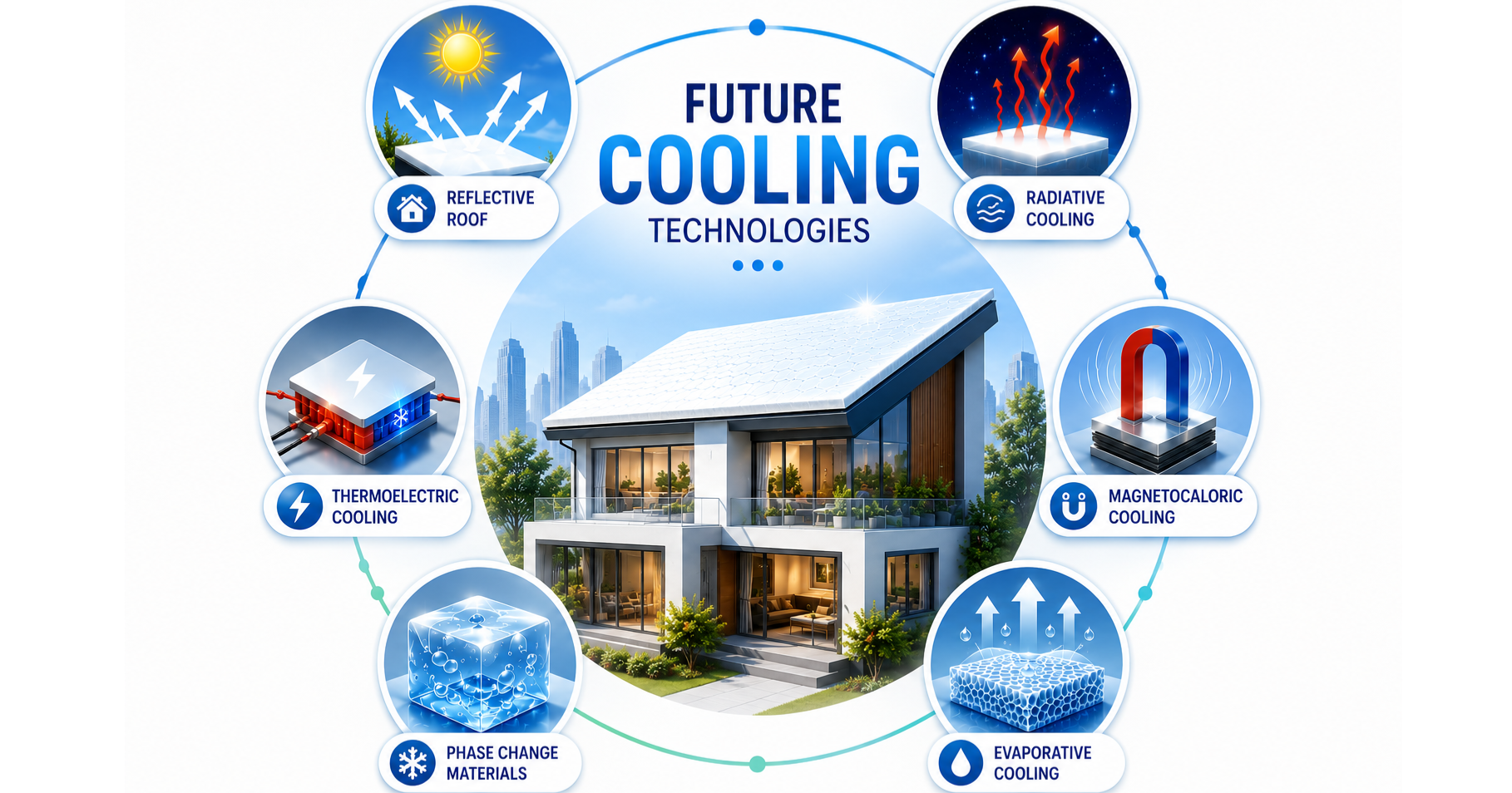
Introductory Memo
When a room becomes unbearably hot, pressing a button on an air conditioner brings almost instant relief. The heat is gone. But, where does all that heat actually go?
For over a century, the answer has remained the same. Conventional air conditioners remove heat from indoors and release it elsewhere using compressors, refrigerants, and electricity. The technology works remarkably well, but it comes with a growing cost. With temperatures rising globally, the demand for cooling is soaring. More cooling means more energy consumption, more emissions, and in many cases, more warming.
Can buildings stay comfortable without relying entirely on conventional air conditioners that use compressors?
Around the world, scientists and engineers are exploring possibilities. Using the most fundamental principles of physics, they are developing entirely new ways to stay cool. Some are inspired by the night sky, some by advanced materials, and others by the behaviour of electrons and atoms. Together, these innovations could transform the future of cooling while reducing its environmental impact.
No comments yet. Be the first to share your thoughts!